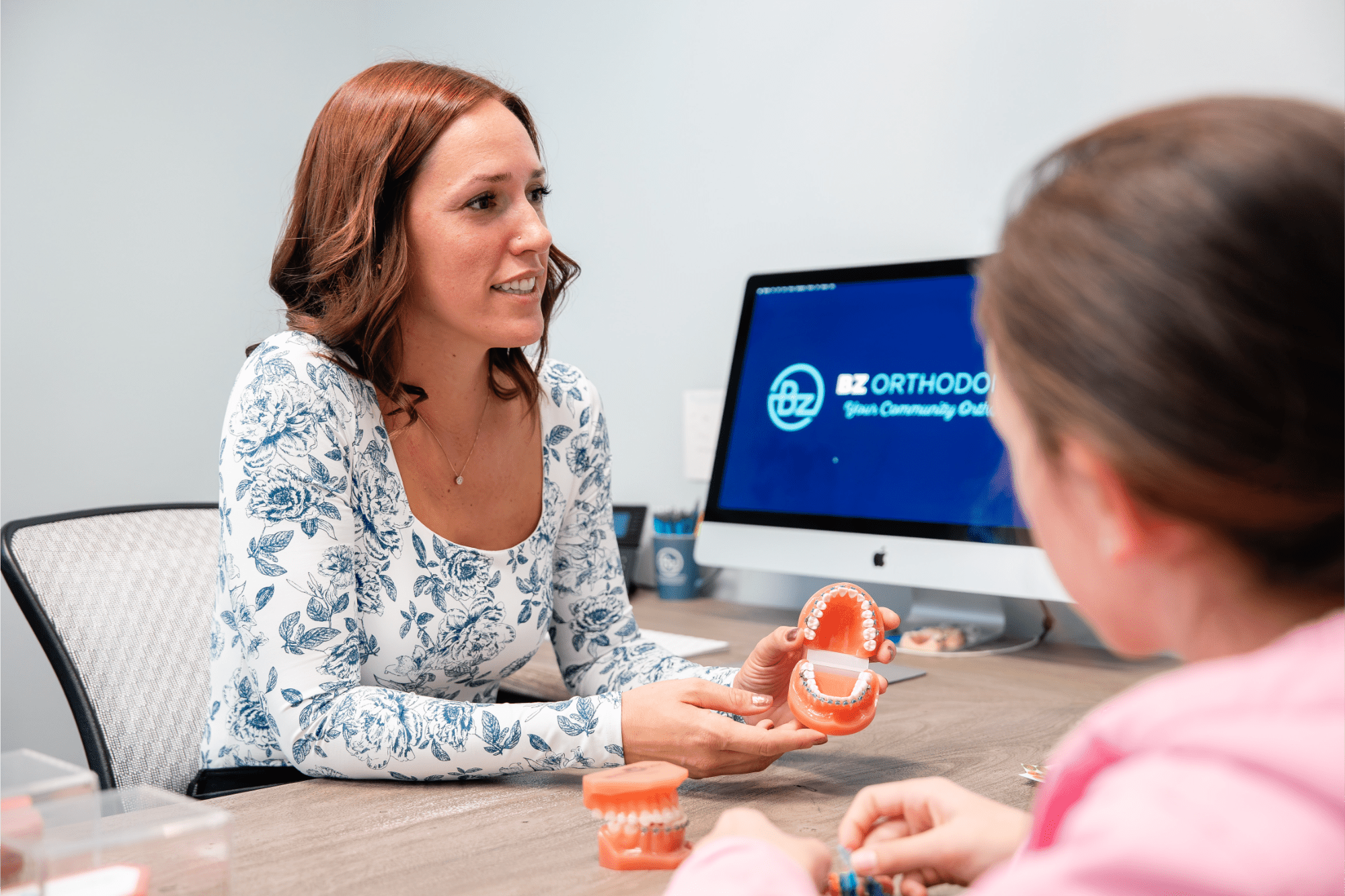
Both straighten teeth. Both use brackets bonded to each tooth and an archwire that does the actual work. The difference comes down to what the brackets are made of, and that one difference changes a handful of practical things worth understanding before you decide.
Here is an honest comparison from an orthodontist who places both every week.

The Short Version
Metal braces use stainless steel brackets. They are the most durable option, handle the widest range of cases, and are visible.
Clear braces, also called ceramic braces, use tooth-colored brackets that blend against the enamel. They are considerably more discreet, slightly more fragile, and need a bit more care to stay looking their best.
Clinically, they work the same way and reach the same result. The decision is mostly about appearance, durability, and how much maintenance you are willing to take on.
Appearance
This is the reason most patients ask about clear braces at all, and the difference is real. Ceramic brackets are made to match tooth color, so from conversational distance they are much less noticeable than steel. They are not invisible. You can see them up close and the archwire is still there, though tooth-colored wires are an option for the front teeth.
Metal brackets are visible, and for a lot of patients that is fine or even part of the appeal. Younger patients in particular tend to like the colored elastic bands, which change at every visit and become something to look forward to rather than hide.
If discretion is the priority, clear wins clearly. If it is not a concern, it should not drive the decision.
Durability
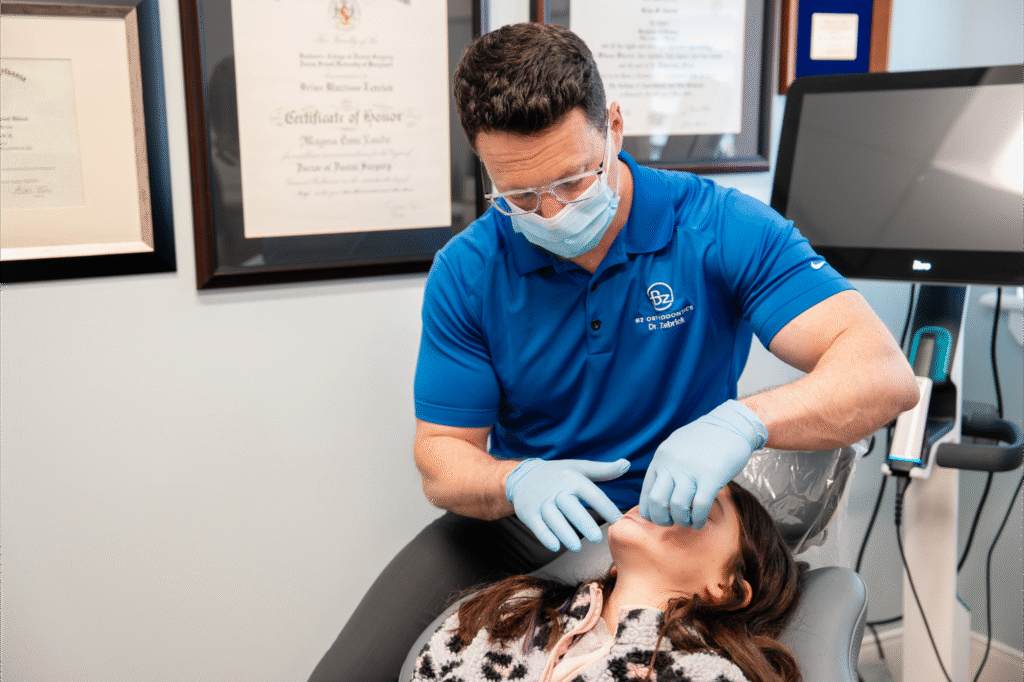
Metal is tougher. Stainless steel brackets are very hard to break, which matters over an 18 to 24 month treatment and matters more for patients who play contact sports or have a habit of forgetting what they should not be chewing.
Ceramic is strong but more brittle. Clear brackets chip or crack more often than metal ones, and each breakage means an extra appointment and a pause in movement on that tooth. It is not a frequent problem, but it happens more than it does with steel.
For younger or harder-wearing patients, this often settles the question on its own.
Treatment Time
Essentially the same. Both systems apply the same kind of continuous force and move teeth at the same biological rate. Most cases run 18 to 24 months either way.
The one caveat is indirect: if clear brackets break repeatedly, the repairs can add time. That is a durability issue showing up as a timeline issue, not a difference in how fast the appliance works. We cover how long braces take and what genuinely affects the timeline separately.

Comfort
No meaningful difference. Both cause the same pressure and tenderness in the first few days and after each adjustment. Ceramic brackets are slightly larger than metal ones, so a few patients notice a bit more contact against the inside of the cheek during the first week, but it evens out as the tissue adjusts.
If you want to know what that first week is actually like, we walk through what the first week feels like in detail.
Staining and Maintenance
This is the difference patients are least prepared for. The ceramic brackets themselves resist staining well. The clear or tooth-colored elastic ties that hold the wire in place do not. Coffee, tea, red wine, curry, and tomato sauce can discolor them noticeably.
The practical answer is straightforward: the ties are replaced at every adjustment visit, so any discoloration resets every four to eight weeks. But if you drink a lot of coffee, the ties may look tinted by week five. Patients who know this going in are rarely bothered. Patients who do not tend to be surprised.
Metal braces have no equivalent issue. Brushing well matters for both, mainly to avoid decalcification marks around the brackets.
Which Cases Suit Which
Both handle the large majority of cases. Where Dr. Brian Zebrick tends to steer toward metal:
- Significant bite correction requiring heavy or complex mechanics
- Younger patients, contact sport athletes, and anyone likely to be hard on an appliance
- Cases where treatment is expected to run long, where cumulative breakage risk matters more
Where clear is a strong fit:
- Adults in client-facing or public roles
- Teens who would otherwise resist treatment on appearance grounds
- Mild to moderate crowding, spacing, and bite issues, which is most cases
A common approach is clear brackets on the upper teeth, which show when you smile, and metal on the lower, which mostly do not. You get most of the discretion with more of the durability.

What About Invisalign?
If discretion is the driving factor, Invisalign is worth considering alongside clear braces. Aligners are removable and far less visible than any bracket. The trade-off is that results depend heavily on wearing them 20 to 22 hours a day, and complex movements are still handled more predictably by fixed appliances.
For adults specifically weighing fixed appliances against aligners, we compare braces and Invisalign for adults in more depth.
How to Actually Decide
Work through it in this order:
- How complex is the case? If significant bite correction is needed, that narrows the options first. Everything else is secondary.
- How much does visibility matter to you? Be honest. If it is the thing that would make you delay treatment, it matters enough to factor in.
- How hard will you be on them? Contact sports and a habit of chewing ice both point toward metal.
- Will the maintenance bother you? If tinted ties between visits would irritate you, that is worth knowing now.
An evaluation answers the first question properly, and the rest follow from there. Browse the full range of treatment options if you want to see everything side by side first.
Come Take a Look
The easiest way to choose is to see both in person. Book a free consultation at our Lansdale office and Dr. Zebrick will show you what each would look like on your teeth and give you a straight recommendation for your case.
Frequently Asked Questions
Are clear braces as effective as metal braces?
Yes. Both use the same bracket-and-archwire mechanism and move teeth at the same rate. For the large majority of cases the clinical result is identical.
Do clear braces take longer than metal braces?
Not inherently. Both typically run 18 to 24 months. Clear brackets break somewhat more often, and repeated repairs can add time, but the appliance itself is not slower.
Do clear braces stain?
The ceramic brackets resist staining well. The elastic ties holding the wire can discolor from coffee, tea, red wine, and strongly colored foods. Those ties are replaced at every adjustment visit, so any staining resets every four to eight weeks.
Are clear braces more fragile?
Somewhat. Ceramic is strong but more brittle than stainless steel, so clear brackets chip or crack more often. This matters most for younger patients and contact sport athletes.
Can you get clear braces on just the top teeth?
Yes, and it is a common choice. Clear brackets on the upper arch where they show, metal on the lower where they mostly do not, gives you most of the discretion with more durability.
Do clear braces hurt more than metal braces?
No. The pressure and tenderness are the same. Ceramic brackets are slightly bulkier, so some patients notice marginally more cheek contact in the first week, and that settles quickly.
Are clear braces better than Invisalign?
They serve different needs. Clear braces are fixed and always working, which suits complex movement and patients who would struggle with compliance. Invisalign is removable and less visible but depends on wearing it 20 to 22 hours a day.
Which is better for adults?
Clear braces are popular with adults for the discretion, but the right answer depends on the case. An evaluation will tell you whether your correction is straightforward enough that appearance can be the deciding factor.